
Personal relationships and family
Spouses, partners, parents, children, relatives and friends.
What to clarify: Care, responsibilities, money, wishes, personal boundaries and mutual expectations.
Explore areas and situations →Understand one another.
Act in alignment.
ObliNet aims to improve coordination among participants. Sufficient mutual understanding is one of the conditions for fulfilling the commitments they undertake.
ObliNet is a proposed system for coordinating joint activity through a network of interconnected commitments, conditions, authorities and dependencies.
Achieving results together requires mutual understanding, agreed commitments and the conditions needed to fulfil them. ObliNet is being developed to help participants account for dependencies between actions, verify results and renegotiate commitments when circumstances change. This requires clarifying the conditions for fulfilling commitments.
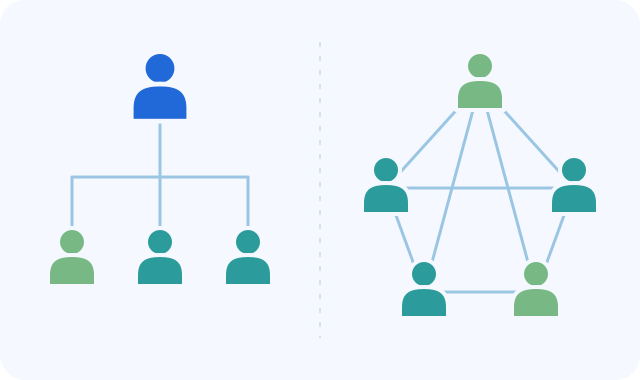
A network of commitments connects participants’ voluntarily confirmed actions, the conditions for carrying them out and dependencies between the results of different actions.
Condition met ≠ action completed. Confirming a commitment does not guarantee fulfilment. A change in a condition does not automatically change agreed commitments.
The diagram is an illustrative example, not a universal payment rule or an operational multi-user system.
Individuals, groups and organizations — wherever people need to understand one another and agree on possible actions.
Spouses, partners, parents, children, relatives and friends.
What to clarify: Care, responsibilities, money, wishes, personal boundaries and mutual expectations.
Explore areas and situations →
Employees, managers, project teams and specialists.
What to clarify: Tasks, roles, authority, priorities, workload, deadlines and responsibility.
Explore areas and situations →
Clients, contractors, sellers, buyers, entrepreneurs and business partners.
What to clarify: Needs, transaction terms, cost, quality, risks, changes and acceptance.
Explore areas and situations →
Students, teachers, researchers and interdisciplinary teams.
What to clarify: Concepts, explanations, assumptions, methods and criteria for results.
Explore areas and situations →
Residents, civic organizations, municipalities, institutions, public officials and participants in intercultural, interfaith and political dialogue.
What to clarify: Needs, values, norms, authority, resources and public consequences.
Explore areas and situations →
Patients, healthcare professionals, caregivers, AI users and people clarifying their own goals.
What to clarify: Recommendations, needs, preferences, constraints and contradictions between personal goals and actions.
Explore areas and situations →Sharing care, the family budget and household responsibilities.
Wishes, comfort, boundaries and freely given consent that can be withdrawn at any time.
Age-appropriate abilities, rules, independence and expectations.
Support, reciprocity, personal space and frequency of contact.
Tasks, dependencies between work activities, deadlines and completion criteria.
Authority, workload, priorities, feedback and responsibility.
Scope of work, changing requirements and acceptance of the result.
Contributions, risks and allocation of decisions and commitments.
Needs, price, quality and terms of exchange.
Meaning of explanations, learning objectives and assessment criteria.
Understanding recommendations, preferences and constraints; checking with a professional.
Terminology, initial assumptions, methods and limits of conclusions.
Residents’ needs, institutional authority and use of resources.
Differences in meanings, values, traditions and acceptable forms of discussion.
Representation, interests, negotiation terms and limits of cooperation.
Defining the task, checking interpretations and understanding the limits of the response.
Personal goals, values, expectations and contradictions between intention and action.
Explore common difficulties · Check the conditions for fulfilling commitments
Choose an example. Each possible cause is a hypothesis to check with the participants.
Example. Colleagues call a task “done”: one means a draft, the other a checked result.
Possible cause. The meaning of the word and the criteria for completion may differ.
What to clarify. Ask each person to describe the completed result and give an example.
Useful outcome. A shared working definition and a clear way to check the result.
Example. One partner expects help without asking; the other waits for a direct request.
Possible cause. Expectations may have remained unspoken.
What to clarify. What help is needed, when, and what the other person is willing to offer voluntarily.
Useful outcome. Explicit expectations and an agreed way to ask for help.
Example. The contractor is waiting for data, while the client expects a result tomorrow.
Possible cause. Dependencies, resources or authority may have been overlooked.
What to clarify. Who provides the data, who can make the decision and which deadlines are feasible.
Useful outcome. A realistic next step; commitments only after participants confirm them.
Example. Partners understand the budget in the same way but want to distribute the profit differently.
Possible cause. Interests and preferences may differ, rather than understanding of the facts.
What to clarify. What matters to each person, where concessions are possible and whether there is room for cooperation.
Useful outcome. Limited cooperation or informed disagreement, without promising reconciliation.
Example. After several discussions, one party stops responding and does not confirm a restatement of their position.
Possible cause. Participation, trust, time or safe conditions may be lacking. This does not prove that interests are irreconcilable.
What to clarify. Whether the party is willing to continue, whether another format is acceptable and whether open discussion is safe.
Useful outcome. A pause, a change of format or a record of obstacles, without concluding that mutual understanding is impossible.
These are local examples, not an intelligent dialogue or an assessment of your situation. Misunderstanding and conflicting interests can coexist; clarifying meaning alone does not remove the conflict.
Participants, roles, goals, perspectives, expectations and constraints.
Significant differences; separating facts from retellings and assumptions.
Clarifying questions and confirmation of meaning by the participants themselves.
An agreed action, limited cooperation, informed disagreement, a pause or another acceptable decision.
↶ New information may require revisiting the context or checking again. These are guides to exploring a situation, not a mandatory linear procedure.
Participants understand each other’s significant positions and expectations with sufficient accuracy.
Positions are understood, but interests, wishes or conditions differ.
The missing information, explanations or checks have been identified.
For example, a party is not participating, conditions are unsafe or open discussion is not possible.
An unsuccessful conversation does not justify concluding that mutual understanding is impossible.
Coordinated action depends on understanding, conditions, resources and confirmed participation.
Mutual understanding is one condition for reliable fulfilment of commitments. Depending on the situation, participants need to check:
This is a working checklist for reliability, not a guarantee of fulfilment. When significant conditions change, related commitments need to be checked and necessary changes agreed.
How conditions and results connect in a network of commitments
A network of commitments connects voluntarily confirmed actions, their conditions and dependencies. Explanations of distributed coordination and the project’s research materials are available below.
Explore examples · All topics and detailed explanations
Search the site’s materials. We’ll soon add AI to provide more precise and useful answers.

Choose any level; there is no required reading order.
ObliNet is a concept for ongoing mutual understanding and alignment of joint activity. Its aim is to help people act together while preserving autonomy, rather than making everyone share the same views.
Neighbors want to improve a courtyard. Some need quiet; others want a place for children. Instead of agreeing on everything, they clarify needs and look for compatible actions.
The approach connects participants’ perspectives, essential details, interdependent commitments and outcome verification. Proposed AI mechanisms still need development and testing. System-wide goals are defined independently of the agreement network: formal compatibility alone does not guarantee success.
Choose any level; there is no required reading order.
Start with what matters to you: an outcome, uncertainty or a conversation that has stalled. Sufficient mutual understanding helps clarify a next step without giving up your own position.
You arrange repairs with a contractor. “Everything ready by Friday” may mean different things. You clarify the work, access to the home, materials and how the outcome will be accepted.
Align the necessary and sufficient details, not every imaginable question. You can propose terms or refuse within your commitments and authority. ObliNet is not therapy and does not promise to resolve personal conflicts automatically.
Choose any level; there is no required reading order.
Shared challenges connect residents, organizations and municipal departments. Account for people affected by an agreement as well as those taking part in it.
Residents propose a safe crossing near a school. Traffic evidence, municipal authority, a design and safety verification are needed; collecting signatures alone is not enough.
Shared goals and public constraints need legitimate foundations. Known commitments may help align contributions, but cannot override third-party rights or established procedures. This is a research scenario, not an operating city-management system.
Choose any level; there is no required reading order.
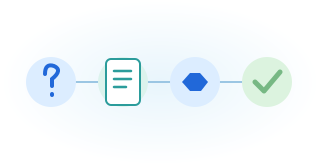
The proposed path is to clarify the situation, identify what matters, agree on actions and dependencies, then verify the outcome. Repeat the cycle when conditions change.
A team plans an event. The venue depends on permission, equipment on delivery and the programme on participants’ readiness. They clarify these links before confirming dates.
Intentions, proposals and confirmed commitments are distinct. A record should describe parties, outcome, deadline, conditions, authority and acceptance criteria. A risk notice does not itself revise an agreement. Research materials describe a draft mechanism; the preserved demonstration runs only a fixed scenario.
Choose any level; there is no required reading order.
In the concept, AI is an assistant: it may suggest questions, notice differences in interpretation and show possible dependencies. Decisions and accountability remain with authorized participants.
A discussion says “we will deliver on time” without a deadline. An assistant could suggest clarifying the date, place and acceptance. Only people confirm what they mean and agree to.
Finding hidden questions and contradictions is a planned intelligent capability, not a guarantee. AI can be wrong; its suggestions need checking and adequate grounds. No AI is connected to this page: the question field searches local materials.
Choose any level; there is no required reading order.
One participant’s output often enables another’s work. It is useful to see not just a single promise but a network of known dependencies.
Materials enable work to start; completed work enables acceptance. A delivery delay affects several parties, even when they have never dealt with each other directly.
A commitment records agreed expectations and conditions, not a guarantee of the future. The known network may be incomplete. Changes require impact assessment and authorized revision; doing the work and confirming its outcome are distinct.
Choose any level; there is no required reading order.
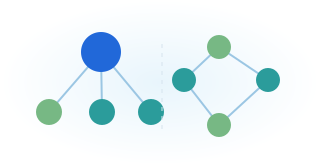
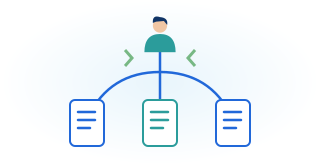
Shared priorities and resources need coordination; local decisions need autonomy and knowledge of the situation. ObliNet investigates combining the strengths of both approaches.
A city sets shared road-repair requirements while crews choose working methods locally. Road closures and shared machinery require coordination between them.
Centralization can support shared goals and accountability but also overload and delay. Decentralization supports initiative but complicates dependency alignment. Necessary and sufficient centralization is a conceptual principle; its benefits and limits require comparative experiments.
Choose any level; there is no required reading order.
Different tasks require different amounts of shared coordination. The proposal is to revisit the allocation of management functions as dependencies and circumstances change.
A department usually chooses its own schedule. During an incident, scarce equipment may require temporary coordination across departments. Once the dependency is removed, some decisions can remain local again.
A system could help identify where local decisions are insufficient or centralization is excessive. It cannot independently reassign established authority. A concrete mechanism for dynamic allocation still needs to be developed and tested.
Choose any level; there is no required reading order.
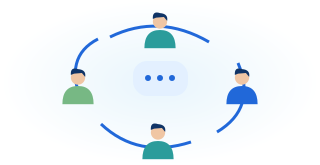
Team alignment means compatible actions by people with different tasks and information. Look at their shared outcome and the conditions needed to achieve it.
Sales promises a client a date, production schedules a release and logistics prepares delivery. Each decision can be reasonable on its own while the shared deadline is infeasible without resource alignment.
Account for actual activity, available information, authority, resources and total costs across all roles. Commitment networks are a means, not a success metric in themselves. Compare against existing tools, including failures, refusals and unfinished work.
Choose any level; there is no required reading order.
Agreement once is not enough: conditions and understanding change. Maintaining understanding means noticing significant changes and clarifying what comes next.
Work is agreed for next week, but a colleague loses access to essential data. Instead of waiting silently, the parties discuss the impact on deadlines and dependent work.
Not all information needs to be shared with everyone. Each person needs information relevant to their role. Updating perspectives, reassessing risk and revising a commitment are different actions. Disagreement may be justified and must not automatically count as a violation.
Choose any level; there is no required reading order.
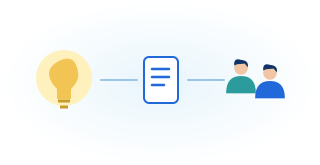
An idea supports cooperation when participants understand the desired outcome, their contribution and how it will be checked. Start with a small agreed step.
People want to plant trees. They first clarify where planting is allowed, who provides saplings and water, who cares for them and how the outcome will be assessed after a season.
A proposal does not create a commitment. Confirmation requires authority and clear conditions. Accepting an action is not the same as achieving the shared goal: planting a tree and keeping it alive are different outcomes. These practical scenarios are illustrative.
Choose any level; there is no required reading order.
Discuss the approach through personal, organizational and civic situations. These examples explain the concept rather than proving deployment effectiveness.
A family clarifies travel plans; a team coordinates a product release; residents and a municipality discuss restoring a service. Each case has different essential details and authority limits.
Start with a specific process: goal, participants, dependencies, changed conditions and a verifiable outcome. Then define the baseline and total comparison costs. No example on this page is a report of a completed organizational pilot.
Sufficient mutual understanding depends on the task and does not require unanimity. Significant conditions and expectations need to be checked with participants. Coordination requires attention to dependencies, resources and authority. Proposed AI mechanisms require further scientific testing.
The concept’s foundations. Proposed AI mechanisms and dynamic allocation of functions still require development and testing.
Scientific overview and preserved demonstrations
Sergey Lachinyan’s ideas, his practical work on Social Synergy and our many years of collaboration became important sources for the development of ObliNet.
While trying to build a system for effective cooperation together, we ourselves encountered the difficulties of mutual understanding and coordination that we are now seeking to address.
Sergey Lachinyan and the origins of ObliNet