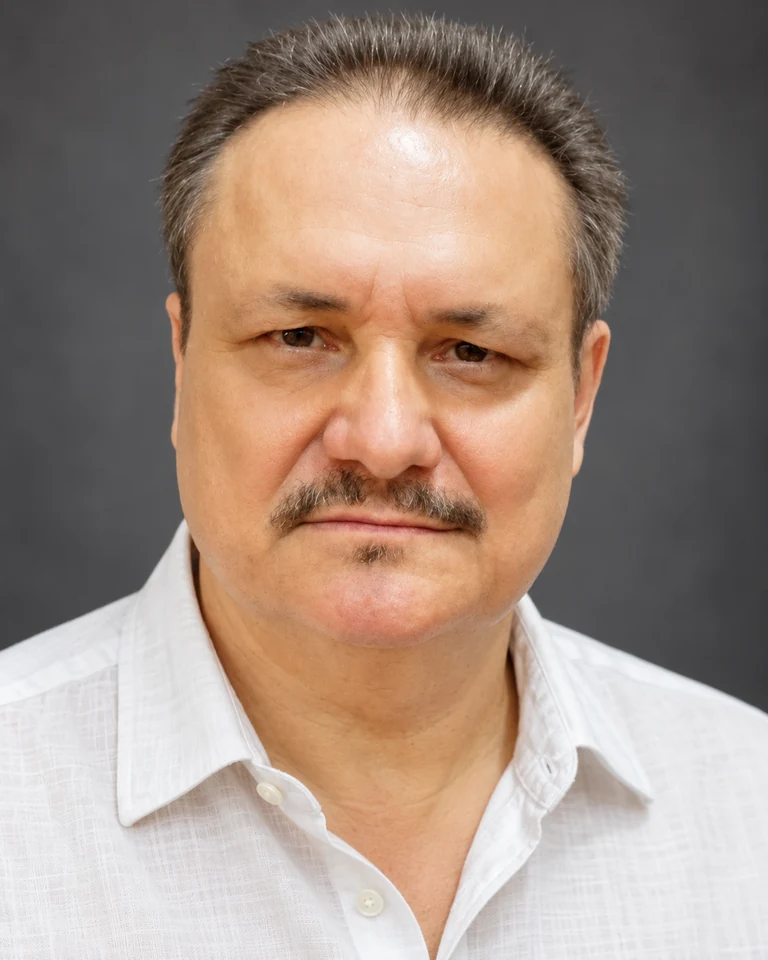
Sergey Lachinyan and the idea of constructive cooperation
Sergey Surenovich Lachinyan was an inventor, researcher and developer of organisational and information-based approaches to human cooperation.
He was interested in a problem that touches almost every area of human activity.
People have knowledge, abilities, experience and resources. They often share interests and recognise the benefits of working together.
Why, then, is joining forces so difficult?
Why do even like-minded people with a sincere interest in a shared goal sometimes fail to agree on how to achieve it and establish lasting cooperation?
How can joint activity expand each participant's possibilities rather than require them to surrender their autonomy?
Sergey sought answers by studying self-organisation, social cooperation, distributed governance and the possibilities of information technology.
His search rested on the idea that cooperation can create new possibilities unavailable to participants acting separately.
But such cooperation does not arise automatically. It requires particular conditions, ways of interacting, coordination of interests and mutual responsibility.
“Social Synergy”
The concept of “Social Synergy” became one of the main strands of Sergey's work.
Its central idea was to identify conditions in which combining people's knowledge, capabilities and resources could produce a result greater than each could achieve alone.
Sergey sought to explore forms of interaction based not only on hierarchical management but also on coordinating the interests and actions of autonomous participants.
This makes organising cooperation substantially different from the familiar view that it is enough to set a common goal, appoint a manager and allocate tasks.
When participants retain their own interests, resources and decision-making rights, ways of coordinating must be found that make cooperation possible and mutually acceptable.
This was the direction in which Sergey developed models of synergetic social structures, examining agreed rules of interaction, distributed organisation of activity and participants' mutual responsibility.
“The Organised Buyer”
One practical strand of his research was the concept of “The Organised Buyer”.
Sergey considered the possibility of pooling the needs of independent buyers and coordinating them with the capabilities of producers and suppliers.
The idea was that people could do more than choose from existing goods and services: they could shape demand together, creating conditions for more effective interaction with producers.
In his publications, Sergey described experiments conducted in Almaty in the late 1990s.
These materials are of interest as accounts of attempts to put his ideas into practice. The results they report nevertheless require separate study and independent assessment.
For me, what matters most here is the direction of the search itself: how to move from isolated actions by individual participants to coordinated activity that preserves their autonomy.
Information tools for cooperation
Sergey understood that complex cooperation could not be organised without suitable tools for working with information.
His research led to suprasystem organisers and the “Thanka” classifier.
These developments addressed the organisation of information, the identification of links between different representations and the organisation of joint activity.
Behind the diversity of his ideas and technical approaches lay one fundamental question:
How can we help autonomous people understand one another, coordinate their interests and turn shared intentions into joint action?
Sergey did not, however, regard technology as a self-sufficient solution to social problems.
In one of his own texts, he emphasised:
No technology on its own will solve our problems without people's active participation.
This thought remains particularly important to me today.
Our collaboration: trying to put ideas into practice
Our collaboration was not confined to theoretical discussions.
We tried to move towards a functioning system that could help people and organisations bring together knowledge, resources and capabilities, find shared solutions and coordinate their actions.
The idea was complex and interdisciplinary.
Realising it required bringing together knowledge from management theory, systems analysis, economics, psychology, programming and other fields.
We needed specialists with different professional backgrounds, ways of thinking and views of the task.
But this was precisely where a contradiction emerged whose significance I only truly understood through our work.
The problem we were trying to solve arose among us
We wanted to create a system that would make human cooperation easier.
Yet as soon as we discussed the idea and tried to organise development, we encountered difficulties in mutual understanding and coordinating our activity.
It was difficult for us to develop and convey a sufficiently coherent picture of the project to potential participants.
Specialists from different fields saw different aspects of the problem, used different concepts and assessed priorities and implementation methods differently.
Even when participants were interested in working together, this did not mean they shared an understanding of exactly what needed to be created or how to organise the work.
We tried familiar ways of overcoming these difficulties: discussion, explanation, clarifying concepts and seeking agreed solutions.
But the complexity of the idea itself required a way of working together that we did not yet have.
We were trying to create a tool for cooperation, but we needed such a tool ourselves in order to create it.
For me, this became one of the most significant lessons of our shared experience.
What we lacked
The information technologies available then could not adequately support complex interaction between specialists working with different subject areas and conceptual frameworks.
The AI tools of that time also lacked capabilities that emerged later.
But the difficulty was not only technical.
We lacked a method that would help participants gradually develop a shared understanding of a complex idea, identify differences in their conceptions, clarify mutual commitments and coordinate changes to them.
Simply assembling specialists and allocating tasks was not enough.
We needed to ensure an understanding of how their individual actions related to one another and to the outcome of the work as a whole.
This very problem, which arose in our own collaboration, helped me understand more deeply the practical significance of the questions Sergey studied.
What remained from our work together
We did not manage to realise everything we had envisaged.
We did not fully create the system of cooperation we had wanted to build.
Yet that experience was not without value for me.
On the contrary, it helped me see more clearly difficulties that remain relevant to many organisations and collaborative projects.
People may sincerely pursue a shared goal yet understand its meaning, the conditions for achieving it, the allocation of responsibility and the consequences of decisions differently.
In complex activity, such differences are not always apparent immediately.
Sometimes they become visible only when deadlines are missed, commitments conflict, resources prove insufficient or the overall outcome is threatened.
Coordination should not, however, mean eliminating differences between people.
Participants may have different interests, values, knowledge and understandings of what is happening.
They do not have to see the world in the same way to find areas where cooperation is possible.
But they do need to understand one another's positions, distinguish real conflicts from misunderstandings, identify compatible interests and coordinate specific actions.
Cooperation does not require complete unanimity. It requires sufficient mutual understanding and coordination where participants' actions depend on one another.
This conclusion became an important link for me between our earlier search and the research we are doing today.
A new stage in the search — ObliNet
Technological capabilities have changed substantially over the years.
Advances in artificial intelligence allow us to revisit problems that once seemed extraordinarily difficult to put into practice.
Modern AI can help analyse large amounts of information, compare different formulations, identify possible contradictions, explore dependencies and prepare possible solutions.
But does this mean that a truly effective infrastructure for human cooperation can now be created?
We do not yet know the answer.
That is why I am developing ObliNet: an independent research and engineering project to create an infrastructure for continuous mutual understanding and coordination of joint activity among people, organisations and AI agents.
The aim is to help autonomous participants do more than communicate and exchange information: to keep interconnected commitments coordinated as circumstances change.
We intend to investigate whether AI can help:
- identify differences in how goals, conditions and expected results are understood;
- clarify agreements and identify their interdependencies;
- notice changes affecting other participants' commitments in good time;
- prepare options for agreeing on new terms;
- distinguish formal fulfilment of individual commitments from actual achievement of shared goals.
Decisions and responsibility must remain with the people and organisations that hold the relevant authority.
What connects ObliNet with Sergey's ideas
A distinction matters here.
ObliNet is not a copy of “Social Synergy”, a continuation of a particular software development by Sergey or a technical implementation of all his ideas.
It is an independent contemporary project with its own hypotheses, models and research methods.
Yet Sergey's ideas, his research into social cooperation, our shared experience and the difficulties we encountered in trying to organise our own collaboration hold an important place in its intellectual history.
Sergey sought to understand how autonomous people can join forces and create new possibilities for joint activity.
In ObliNet, we are exploring one possible path towards addressing this broader challenge, using the new capabilities of artificial intelligence.
What these approaches share is the question they ask, not identical technical solutions.
How can participants' autonomy be combined with coordinated action so that cooperation genuinely helps achieve shared goals?
Why this matters beyond individual organisations
The problem of mutual understanding and cooperation extends far beyond managing projects and businesses.
We live in a world where people and communities may differ substantially in their interests, values, beliefs and visions of a desirable future.
Political, ideological, religious and ethical disagreements sometimes make cooperation almost impossible.
But do different views always rule out every form of joint action?
In some situations, people may be able to find acceptable forms of interaction without agreeing on every fundamental issue.
This requires the ability to distinguish incompatible goals from contradictions caused by an incomplete understanding of positions, capabilities or the conditions of interaction.
Of course, better information exchange cannot resolve every conflict. Real conflicts of interest, values and power relations exist.
Yet there are many possibilities between complete agreement and the complete impossibility of cooperation.
We want to investigate whether new AI-assisted ways of sustaining mutual understanding and coordinating commitments can expand the scope for such cooperation.
Not to eliminate differences between people, but to help them find opportunities for joint action where this is actually feasible.
From an idea to testable research
Working with Sergey taught me something else: an important and appealing idea does not in itself guarantee feasibility.
That is why I now consider it especially necessary to separate proposed possibilities from experimentally confirmed results.
ObliNet has a formulated research hypothesis and drafts of formal models, experimental scenarios and comparative testing protocols. Individual software demonstrations exist.
But the effectiveness of the proposed infrastructure as a whole has not yet been confirmed by reproducible end-to-end experiments or verified results from practical deployment.
We intend to begin by modelling an organisation in which situations involving interdependent activity can be reproduced and different approaches to coordination compared.
We need to establish whether the proposed mechanisms help identify problems earlier, reduce losses caused by poor coordination and improve the achievement of shared goals, taking all costs into account.
If the modelling results provide sufficient grounds, the next step could be a limited pilot study in a real organisation.
Positive results are not our only concern.
It is equally important to establish when the proposed approach does not work, costs too much or performs worse than existing ways of organising activity.
Objective testing is what will allow ObliNet's actual capabilities and limitations to be established.
Sergey Lachinyan's legacy
Sergey's ideas deserve study in their own right, regardless of ObliNet's future.
His work is of interest not only as the history of particular inventions and organisational solutions, but also as an attempt to understand the fundamental problem of human cooperation.
They contain reflections on social cooperation, self-organisation, bringing together needs and resources, information tools and the possibilities for coordinated activity among autonomous participants.
Some of his proposed solutions require further research and independent assessment. Others may provide starting points for new questions and developments.
It matters to me to preserve the original meaning of these works, without replacing it with contemporary ideas or attributing to Sergey things he did not say.
Sergey's materials
Personal blog: “Creating the Forces of Creation”
The author's publications and materials on social synergy and organising constructive cooperation.
“Social Synergy” — the author's materials
Sergey's reflections on social cooperation, interaction between participants and the conditions for combining their capabilities.
List of Sergey Lachinyan's publications
Materials introducing the different strands of his research.
The author's sources contain accounts of practical trials, individual developments and reported results. Historical study and independent assessment of these accounts could form a separate strand of further work.
A memory that lives on
For me, Sergey Surenovich Lachinyan remains more than a researcher, inventor and author of interesting ideas.
He was my friend and collaborator, someone with whom I shared a desire to find ways of making human cooperation more meaningful, free and effective.
We discussed many things, tried to realise complex ideas and faced obstacles we could not always overcome.
We did not realise all our ideas. We did not find answers to every question.
But the questions themselves live on.
I believe a person's memory is preserved in more than accounts of their life and achievements.
It also lives in the ideas that new generations continue to discuss, examine critically, develop and test.
Preserving Sergey's legacy means treating his own work with care, seeking to understand its substance and not replacing it with later developments.
Continuing our shared search means asking again the questions we encountered and trying to answer them using new knowledge and capabilities.
I would like to believe that advances in artificial intelligence, combined with human responsibility, critical thinking and a willingness to cooperate, will allow at least a few steps in this direction.
We do not know in advance how far we will get.
But if our research helps people understand one another better, retain their autonomy and find opportunities for constructive cooperation, I will see it as a worthy continuation of the work to which Sergey devoted so much effort.
I dedicate this work to the memory of Sergey Lachinyan: my friend, collaborator and a person whose ideas continue to inspire my search.
Alexander Rozenzhak
Initiator of the ObliNet project