Topic / ObliNet
Centralized and distributed governance
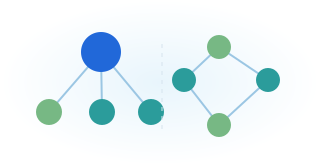
ObliNet aims to reduce the disadvantages of centralized and distributed governance and strengthen the advantages of both. This is a broader proposition than improving mutual understanding: mutual understanding is one of the mechanisms here.
| Approach | Advantages ObliNet aims to strengthen | Disadvantages it aims to reduce |
|---|---|---|
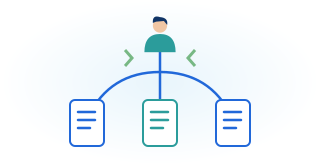
| Centralized governance | Unity of goals, aligned priorities and clear responsibility | Leadership overload, approval delays and information loss between levels |
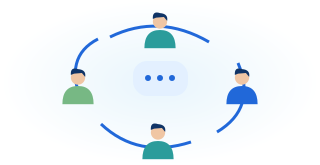
| Distributed governance | Autonomy, initiative, use of local knowledge and faster decisions | Incompatible local decisions, invisible dependencies and actions diverging from common goals |
The connecting mechanism is a shared network of explicit, interconnected and verifiable commitments. Participants see whom their work depends on and whom changes affect, maintain mutual understanding and renegotiate actions. Leadership gains the opportunity to maintain an overall direction while delegating more decisions to participants.
ObliNet aims to combine the unity of goals and responsibility of centralized governance with the autonomy and flexibility of distributed governance through continuous coordination of participants’ interdependent actions.