Skip to content
ObliNet
ObliNet research models

The preserved model of interconnected commitments and the research explanations from the previous homepage.

ObliNet — shared rules for cooperation between people, organisations and AI

We are developing a protocol: shared rules for agreeing conditions, accepting interconnected commitments, verifying outcomes and revising agreements when circumstances change.

People and organisations confirm which decisions and outcomes they take responsibility for. AI helps account for interests, capabilities and dependencies. ObliNet aims to create conditions for using and developing participants’ and the system’s potential more fully.

From rules to infrastructure

The protocol defines shared rules. Accepted commitments and dependencies form a network. Compatible tools, durable records and delivery of changes to affected participants should gradually form the ObliNet infrastructure. Publishing rules or an AI instruction is insufficient: common formats, versions, participant identity, access rights and compatibility checks are needed.

The challenge of joint activity

Everyone completed their task.
But the shared result was not achieved.

The documentation is ready and the equipment delivered — but they are incompatible.

One deadline changed — related plans remained unchanged.

Local performance measures were met — total costs increased.

Achieving a shared result requires coordinating not only tasks, but also what participants deliver to one another: results, conditions, resources and acceptance criteria.

Individual actions. Shared consequences.

Where does misalignment arise?

Choose a situation. Select a participant or an arrow to explore a commitment.

SITUATION AND PARTICIPANTS

What happened

The designer prepared documentation for model A. Procurement delivered model B equipment. On inspection, the contractor found that the equipment did not meet the documentation’s mandatory requirements. Installation under this design is impossible without agreed changes.

LINKS AND ALIGNMENT

Affected commitments

The documentation specifies requirements for model A, which the delivered model B equipment does not meet. The contractor cannot install according to this documentation and deliver the agreed result to the customer: compatibility must be checked or replacement of one of the input results agreed.

Model A ≠ model B

Participants’ conditions and measures

DesignerDocumentation for model AProcurementModel B deliveredContractorCompatibility requiredCustomerA functioning result

↔ The map is wider than the screen. Scroll left and right; use the arrow keys with a keyboard.

DocumentationEquipmentWork result

Illustrative situation · misalignment present

The map displays mutual commitments and their connections, while AI analyses available information and suggests options for alignment. Authorized participants make the decisions.

How the protocol works

Proposal → conditions checked → confirmations → active version → execution → outcome verification → acceptance. Refusal, dispute and revision are possible. An AI proposal, an instruction and an accepted commitment have distinct statuses; “done” does not replace acceptance.

Illustrative example: the venue becomes unavailable

A team is preparing a concert. The venue service commits to a hall and electricity; the performer commits to preparing sound under these conditions; the organiser confirms readiness against agreed criteria. The hall becomes unavailable. AI may suggest a courtyard, but this is not yet an agreement. The system shows that sound depends on electricity and posters on the address. The service confirms the new venue and power, the performer a feasible deadline, and the organiser authorises the change within their authority. The new version takes effect after required confirmations. Readiness is checked against evidence; if no acceptable option exists, refusal or revision is recorded rather than invented consent.

How the protocol works

Explore further

Details and research materials

What problem are we investigating?

Why existing collaboration tools may not be enough

Imagine an ordinary situation.

Several contractors carry out interdependent work. One prepares the site, another installs the equipment, and a third checks the result.

They have all agreed their schedules.

But site preparation is delayed. The first contractor knows this; the second is already scheduling workers and equipment, while the third still expects the inspection to take place on the original date.

The problem is not just the delay itself. Participants need to understand its consequences in time, identify acceptable options and agree changes.

This often requires additional correspondence, meetings, clarification of responsibilities and revised plans.

Even when information is available, it does not necessarily turn into shared understanding and coordinated action.

Can collaboration be organised so that participants notice such problems earlier and agree changes with lower total losses?

This is the possibility we want to investigate.

The example demonstrates a limited scenario, not the operation of a finished platform.

How ObliNet differs from established management tools

What fundamentally new approach we propose

ObliNet is based on representing joint activity as a changing network of interdependent commitments.

Each commitment is intended to be described so that the participants concerned understand:

  • who makes the commitment and to whom;
  • what result must be achieved, under what conditions and by when;
  • which resources, authority and actions by other participants are needed;
  • how achievement of the agreed result will be confirmed.

What matters is not only individual agreements, but also the links between them.

Changes to one commitment’s conditions may affect many other participants. ObliNet is intended to help detect such dependencies, show possible consequences and prepare options for renegotiation.

Three things must be distinguished:

Understanding does not mean agreement. Participants may understand one another’s positions correctly while having different interests.

Agreement does not mean feasibility. Even a confirmed agreement may be impossible to fulfil because of insufficient resources, incorrect information or changed circumstances.

Fulfilling commitments does not guarantee achievement of the shared goal. Individual pieces of work may be accepted without the organisation as a whole achieving the result it needs.

ObliNet is therefore intended not merely to record agreements, but to support coordinated activity in light of the actual situation.

AI’s role is to help participants understand the situation and prepare decisions, without replacing their will or responsibility.

What would count as research success?

What exactly we want to test

The main research question:

Does coordinating interdependent commitments using the proposed ObliNet mechanisms enable shared goals to be achieved better than existing methods of coordination?

It is not enough to show that the system detects contradictions or helps renegotiate plans more quickly.

We need to establish whether actual outcomes improve: quality, schedules, resource use and the full costs incurred by all participants.

How much additional work the new mechanisms themselves require is particularly important.

More precise coordination may bring substantial benefits in some circumstances, while its costs may be unjustified in others.

Our task is to identify these conditions, not to confirm ObliNet’s superiority at any cost.

It is also important to test whether participants retain their autonomy: the ability to propose conditions, make decisions within their authority and give reasoned refusals of unacceptable commitments.

What has already been prepared?

What has already been prepared

The ObliNet scientific hypothesis has been formulated, and draft formal and synthetic organisation models and protocols for comparative experiments have been prepared.

Individual browser-based demonstrations of some proposed mechanisms have been created.

However, reproducible results from an end-to-end experiment of the new architecture and a confirmed evaluation of its practical effectiveness have not yet been presented.

We are therefore seeking participants in joint research, rather than customers for deployment of a finished system.

More about material readiness and results

Scientific materials and details

Scientific materials — for those wishing to explore further

The main page introduces the ObliNet concept and research plan. The detailed materials allow readers to assess the hypotheses, proposed mechanisms, evaluation methods and development readiness independently.

Scientific hypothesis

What is expected to improve, how success will be defined and which results could limit or refute the hypothesis.

Formal model

How participants, authority, commitments, conditions, dependencies and renegotiation rules are intended to be described.

Synthetic organisational model

How to create an experimental organisation in which actual events and results are independent of what participants know or record about them.

Comparative experimental protocols

How to compare coordination methods, account for all costs, assess uncertainty and distinguish the effects of individual mechanisms.

Results and readiness of research materials

Which materials and demonstrations are already available, what has not yet been tested and what evidence will be needed to confirm the results.

Scientific discussion

Open questions, limitations and opportunities for critical analysis of the programme.

Scientific glossary: RU / EN / HE

Working definitions of key concepts in Russian, English and Hebrew.

Earlier materials, descriptions of additional mechanisms, experimental exercises and demonstrations are preserved separately. They are available for study, but do not establish the effectiveness of the entire proposed infrastructure.
Full original description of the concept

ObliNet research programme

ObliNet — new infrastructure for collaboration between people, organisations and AI agents

We are exploring the possibility of creating infrastructure that will help independent participants understand one another better, coordinate joint activity and achieve shared goals.

People and organisations now have many tools for communication, information sharing and task and project management. Yet these tools do not always help maintain a shared understanding of events and coordinated action, particularly when participants have different interests, knowledge and authority, and circumstances keep changing.

The idea of ObliNet is to complement existing ways of interacting with a network of interconnected, verifiable agreements, in which participants can understand not only their own tasks, but also how their decisions and commitments relate to others’ actions.

AI is expected to help detect differences in understanding, identify dependencies, assess the consequences of changes and prepare options for joint decisions.

Participants retain their autonomy and their right to negotiate conditions, make decisions and take responsibility for them. AI does not replace human authority.

Our main hypothesis is that organising interaction in this way may improve joint outcomes without an unjustified increase in coordination costs.

ObliNet is a research and engineering project working towards practical application. The next step is to test the proposed hypothesis experimentally, assess the approach’s benefits and identify conditions for its successful use. Research results will provide the basis for creating a platform to help people and organisations collaborate better.

Discuss participation in the research

What we can build on

Related principles are already in use

These practices help clarify the ObliNet concept.

Hoshin Kanri / Catchball

Discussing goals across organisational levels and departments helps coordinate action and the support required.

Lean Enterprise Institute ↗

A hypothesis, not a demonstrated effect

Testing benefits — accounting for all costs

Can coordinating interdependent commitments improve the shared outcome without an unjustified increase in coordination costs?

Comparison conditions and measures

We will compare coordination methods under comparable conditions and access to AI. Quality, schedules, resource use and full costs, including work with the system itself, must be measured. Negative and inconclusive results also matter.

How we plan to conduct the research

The research is intended to have two successive stages.

Stage 1. Experiments on an organisation model

First, compare coordination methods using a computer model of an organisation.

Detailed description of the stage

We first plan to create a computer model of an organisation in which participants carry out interdependent tasks with limited resources, incomplete information and changing circumstances.

Different coordination methods will be compared using this model — with and without ObliNet mechanisms.

An objective comparison requires comparable conditions, including participants’ access to AI tools.

We want to find out whether the proposed mechanisms help:

  • identify significant differences and dependencies earlier;
  • adapt better to changes;
  • reduce errors and losses from misalignment;
  • improve achievement of shared goals, accounting for all costs.

Modelling will allow us to assess possible benefits and identify the approach’s limitations before moving to research involving real organisations.

Stage 2. Pilot study in a real organisation

Then, if the results provide sufficient grounds, conduct a limited pilot with a partner organisation.

Detailed description of the stage

If modelling yields sufficiently convincing results, a limited pilot in a real organisation may be the next step.

Together with a partner organisation, we intend to select a specific workflow and define experimental conditions, success criteria and acceptable limits.

The aim is to test whether effects found in modelling persist in real activity, with its human interests, organisational characteristics and unforeseen circumstances.

Progress to the second stage will depend on the first stage’s results, the readiness of the tools and agreements with partners.

We regard negative and inconclusive results as a necessary part of research. They may show where new infrastructure is actually needed and where existing tools are sufficient.

Protocols for comparative experiments →

Invitation to collaborate

Where could collaboration begin?

Describe a familiar situation, help formulate outcome criteria or discuss a way to test the hypothesis. No confidential documents are needed for an initial conversation.

Discuss participation →
What forms of participation are possible?

We invite managers, entrepreneurs, researchers and specialists familiar with the challenges of organising joint activity.

The participation of people with practical experience managing complex processes, projects and collaboration between independent organisations is especially valuable.

You can help the research even if you do not work in programming or science.

For example:

  • Describe a real situation in which difficulties in mutual understanding or coordination led to delays, errors or additional costs.
  • Help develop a realistic model of an organisational process and identify which circumstances it needs to account for.
  • Participate in evaluating results by helping choose meaningful criteria for successful joint activity.
  • Help prepare a future pilot if the modelling results provide grounds for conducting one.

An initial discussion does not require confidential documents or changes to existing workflows.

A brief description of a familiar situation, its participants, shared goal and difficulties is enough.

We also welcome critical analysis of hypotheses, alternative approaches and proposals for independent comparative experiments.

You do not have to believe in ObliNet’s effectiveness in advance. A willingness to work together towards a testable answer matters more.

Describe a situation or discuss participation in the research

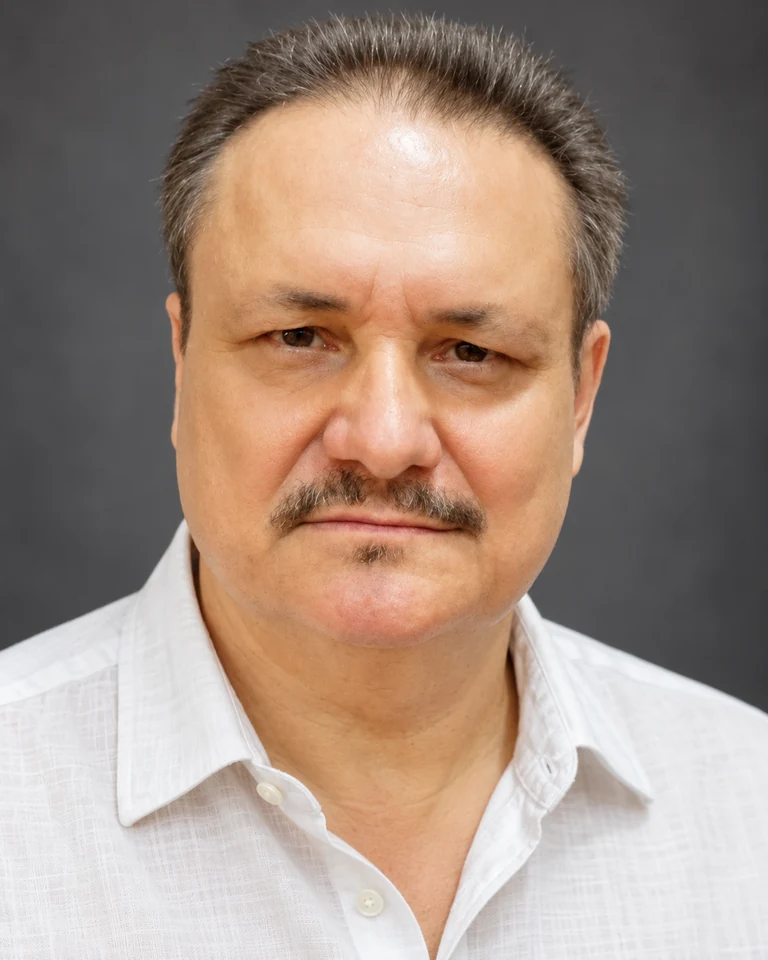
Portrait of Sergey Lachinyan

In memory of Sergey Lachinyan

Researcher, inventor, author of the “Social Synergy” concept, my friend and colleague.

Sergey Surenovich Lachinyan devoted much of his life to finding ways for people to join forces while retaining their autonomy, freedom of thought and responsibility.

Together, we tried to find a practical solution to this challenge — and encountered the very difficulties in mutual understanding and organising collaboration that we sought to overcome.

His ideas, our joint work and the experience we gained became an important part of ObliNet’s history. Today, with new possibilities offered by AI, I continue that search.

I dedicate this work to Sergey’s memory — a person whose ideas and pursuit of constructive collaboration continue to inspire me.

Alexander Rozenzhak

More about Sergey Lachinyan, his ideas and our work together →